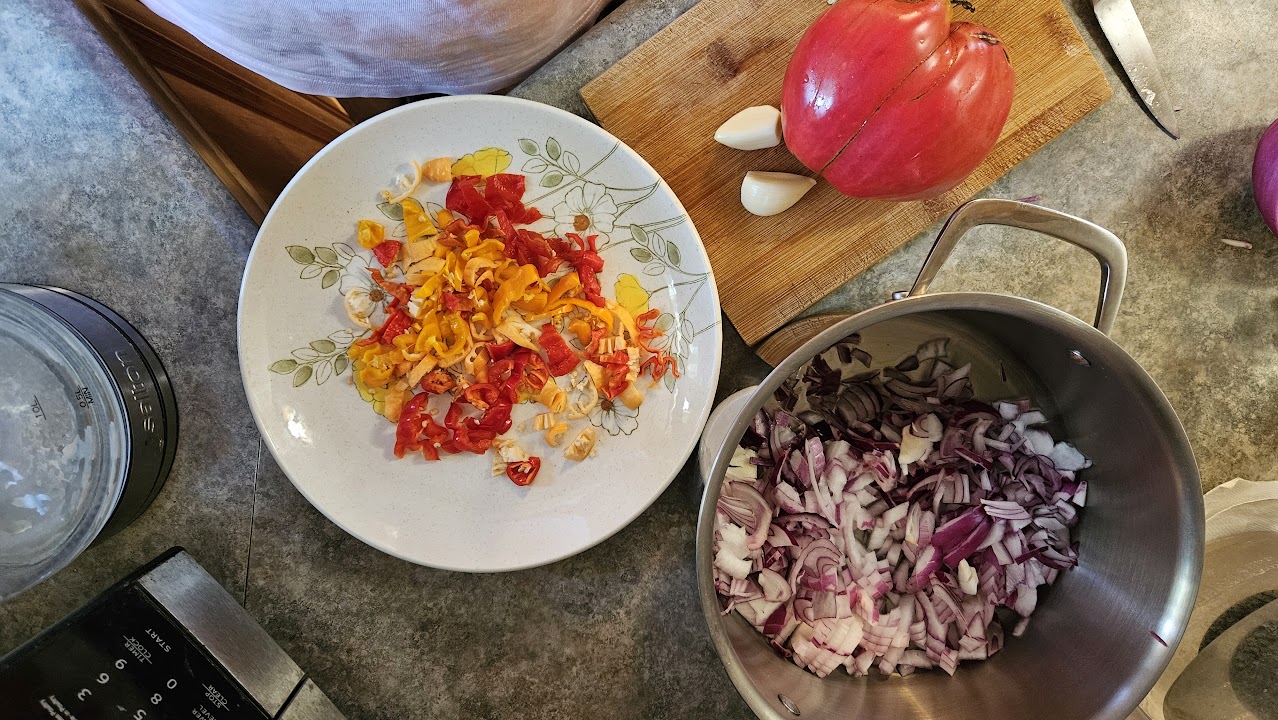

Tomato Sauce with Hot Peppers
(or: How I Accidentally Created a Weapon)
My wife is endlessly curious about tomatoes. Not just how they taste—but how they live.
How different varieties grow, how they look at every stage of development: from seed to seedling, from seedling to a full-grown plant, and finally to fruit. What color they turn, what shape they take, and—most importantly—how they taste.
This curiosity of one family member, however, has a funny side effect: it regularly pushes the rest of the household to the very edge of tomato-related survival once harvest season arrives. And that’s exactly where this story begins.
Every summer, we grow an unreasonable amount of tomatoes. Not “a few extra” tomatoes—tomatoes everywhere. More than we can eat. More than we can give away. More than anyone reasonably needs.
Naturally, we did what all sane people do:
salads. Lots of salads.
Olive oil.
Sour cream.
Mayonnaise.
Repeat.
Eventually, even the tomatoes started judging us.
Around that time, my colleagues—good people, but clearly unafraid of pain—introduced me to the world of hot sauces. These are the kinds of people who grow peppers not for flavor, but to test human limits. They would regularly bring their peppers to work. I would share tomatoes in return. A fair and peaceful vegetable exchange.
From this beautiful barter system, one idea emerged:
“Why don’t I make my own hot sauce?”
How hard could it be?
I had never made sauce before, so I consulted my wife, who wisely suggested a simple approach: tomatoes, onions, garlic… and just a little hot pepper. Very reasonable advice. I almost followed it.
Cooking with hot peppers, however, is not something you do casually. Gloves are mandatory. Windows must be considered. Pets must be protected. Family members must be warned. Because of this, a strategic decision was made: this operation would take place outside, on the barbecue.
For safety. And survival.
I sliced tomatoes, onions, garlic, and a few innocent-looking hot peppers. First, I caramelized the onions, then added tomatoes and garlic. Everything was going smoothly—too smoothly. About 20 minutes later, I added the peppers.
That’s when the air changed.
A thick, spicy cloud surrounded the barbecue. Breathing became optional. Eyes watered. Somewhere in the distance, I imagine neighbors felt uneasy without knowing why. At that moment, I fully understood that cooking inside would have required evacuation procedures.
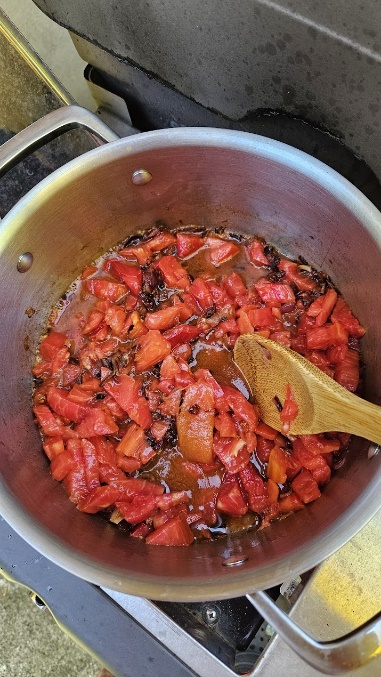
It might be worth mentioning that the peppers were ghost peppers and Carolina Reapers.
Yes. Those peppers.
I was also strictly banned from using the blender, so instead of smooth sauce, I committed to a very hands-on approach. Every two minutes, I checked the pot and stirred like my life depended on it—which, honestly, it kind of did. When the sauce was ready, I used a potato masher to crush everything. The result was a chunky, aggressive-looking sauce that gave off a quiet warning: “Approach carefully.”
And you know what?
It was excellent.
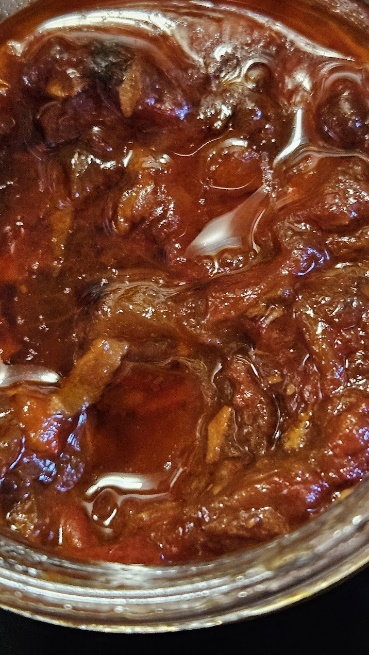
Rich, flavorful, deeply tomato-forward, with heat that starts friendly and ends with regret. It quickly became my favorite addition to morning boiled eggs—instantly transforming breakfast into an event.
Even better, my colleagues loved it. Some asked for more. Some asked what peppers I used. A few just nodded silently, which I took as the highest compliment.
Would I do it again?
Yes.
Outside.
With gloves.
And possibly a fire extinguisher.
What started as a simple attempt to deal with an overwhelming harvest slowly turned into something else.
Working with tomatoes, growing them, watching them change, tasting them at different stages, has a way of slowing you down. It forces patience. Seeds don’t rush. Plants don’t negotiate with schedules. And fruits arrive when they’re ready, not when it’s convenient.
In the kitchen, that same lesson continues. Some tomatoes give generously, others resist. Some surprise you, others disappoint. None of them behave exactly the same, even when treated the same way.
Over time, it becomes clear that tomatoes aren’t just ingredients. They are the final chapter of a long process that began months earlier, quietly, in soil and sunlight. What ends up on the plate, or in a jar - is simply a reflection of that journey.
And perhaps that’s the real reason we keep growing them. Not just for the harvest, or even the taste, but for the chance to witness something complete its cycle, from seed to fruit to something shared with others.